A New Obsession: Discovering Trials Motorcycle Riding
Over the years, two wheels and challenging terrain have been constant themes in my life. From downhill mountain bikes to dirt bikes, adventure motorcycles, and just about anything that rewards balance, precision, and commitment, I’ve always been drawn to the technical and creative side of riding. Most recently, that curiosity and some rad friends, led me into a new discipline altogether … trials motorcycle riding.
My introduction was the classic “when your friend gets one you need one too” story. A buddy called and said, “I got an extra trails bike so I have one for you to ride! You are a sponsored trials rider now so you can’t say no!” So like any other make-believe factory rider I rolled into my buddy’s house with boots and a helmet and was handed an old GasGas TXT 280, and given a quick rundown of the bike.
The gearing is completely different than anything else. A trials bike transmission is built for torque and precision, not speed. The gearing is extremely low, with a close-ratio gearbox and a large rear sprocket that multiplies torque at the rear wheel, allowing the bike to move at walking pace or slower with full control. Riders often pick a gear suited for the line or obstacle and use the clutch to finely manage power, rather than shifting frequently. Combined with a smooth, torque-focused engine and heavier flywheel effect, this setup makes it easy to balance, crawl over obstacles, and deliver controlled bursts of power like a rock crawler.
After a few days climbing up steep hills and over small rocks I was hooked. I started watching videos online, seeing the extreme terrain the pro riders were tackling, and started to get inspired. Then I realized I need to get my own bike and not crash my buddy’s bike (anymore). Off to the FB Marketplace and I was excited to see a lot of things available from $1500-$3500 for what appeared to be ready-to-ride.
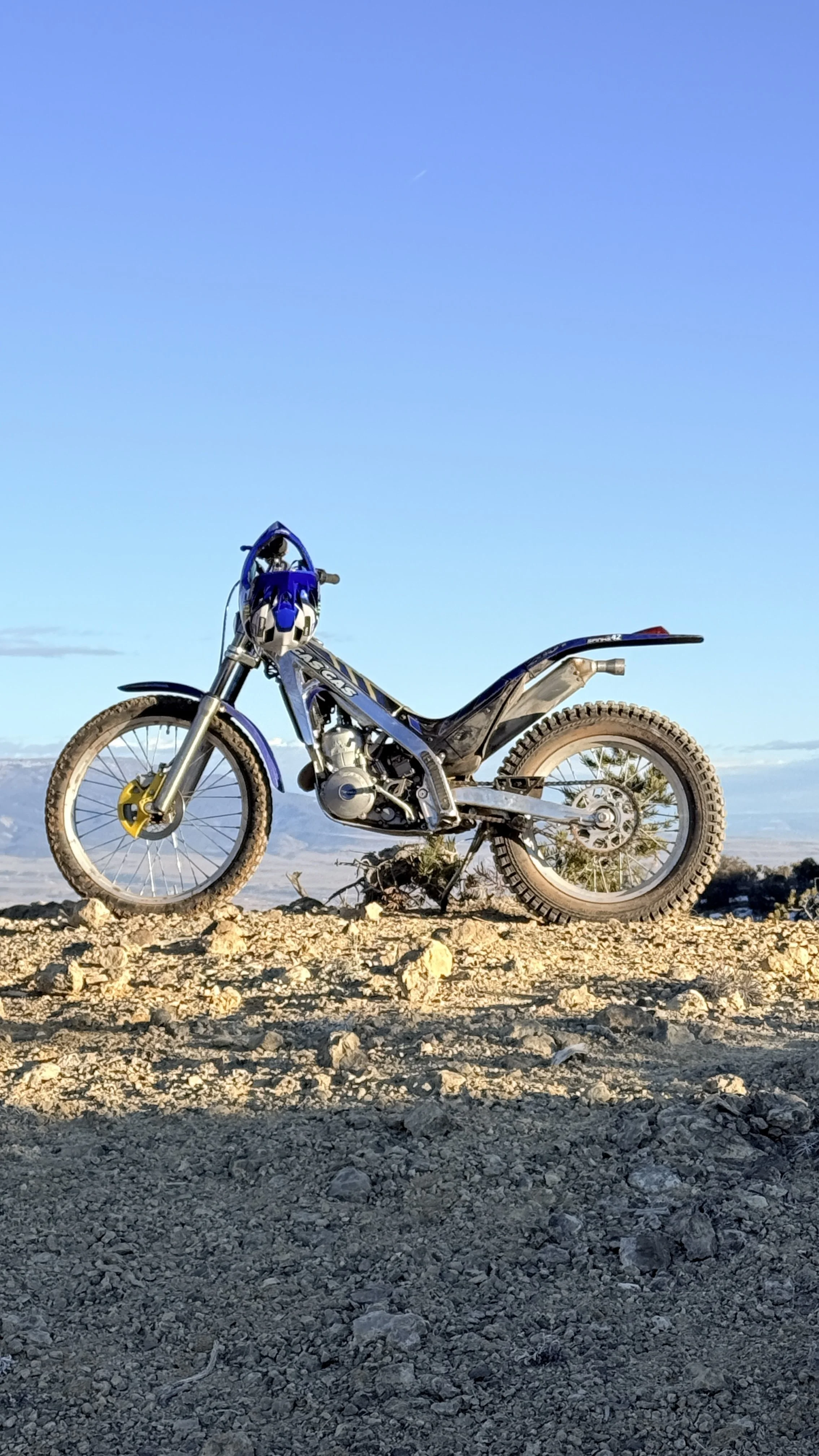
After a few classic marketplace conversations, I was able to trade an older pedal-assist eBike I had in the garage for a 2001 GasGas TXT 321 Pro. It’s an old bike by modern standards, but one with a legendary reputation in the trials world. Powered by a 321cc two-stroke engine, the TXT 321 Pro offers more torque and a smoother, more forgiving power delivery, especially helpful for bigger obstacles, steeper climbs, and the elevation I am riding at here in Colorado. It’s a simple, mechanical, purpose-built machine perfect for me to start with. I have nicknamed it the 3-2-1-GO because you put it in gear, let the clutch out and it just goes!
Trials riding has deep roots, particularly in Europe where it remains far more popular, however the sport has a growing community here in the United States. The discipline has evolved as a test of balance, throttle control, and precision rather than speed and big jumps. Riders navigate sections filled with natural obstacles including rocks, logs, ledges, creeks, walls and man-made challenges of all shapes and sizes. The goal is to ride up, down and across the sections cleanly without putting a foot down. One reason trials riding thrives overseas is efficiency: it requires very little space relative to motocross or off-road racing. A compact riding area can offer endless challenges, making it ideal for densely populated regions, or areas where there is not as much access to designated riding areas. Riders can train on everything from riverbeds and forested hillsides to custom-built obstacles in a parking lot.
Here in the US with our vast public lands, trials riders often share a lot of areas with other off-road enthusiasts. My own off-road background is broad and deeply rooted in Colorado, Utah, and the western United States where I’ve spent years exploring rugged terrain in my T4R, side-by-sides, and motorcycles both locally and in iconic destinations like Moab, Ouray, Sand Hollow, and Johnson Valley, where even the most seasoned off-roaders are humbled by the terrain. That experience taught me how critical line choice, momentum, and patience are crucial when the trail turns truly technical. There is also my experience in mountain biking, another discipline that rewards commitment and punishes hesitation. I’ve always gravitated toward the gnarly stuff; rock gardens, steep chutes, awkward transitions, and terrain that forces you to slow down, think, and execute with intention. Looking back, it’s obvious why trials feels like such a natural fit.
The trials bike is the latest two-wheel category I’ve entered, and it might be the most transformative yet. Trials teaches foundational skills that transfer directly to every other motorcycle discipline: balance, body position, throttle and clutch precision, braking control, and the ability to read terrain at walking speed. Riders like Cody Webb and Pol Tarrés are perfect examples, they both started in trials and carried those skills into hard enduro and even massive machines like the Yamaha Ténéré, doing things that seem physically impossible. It is really inspiring.
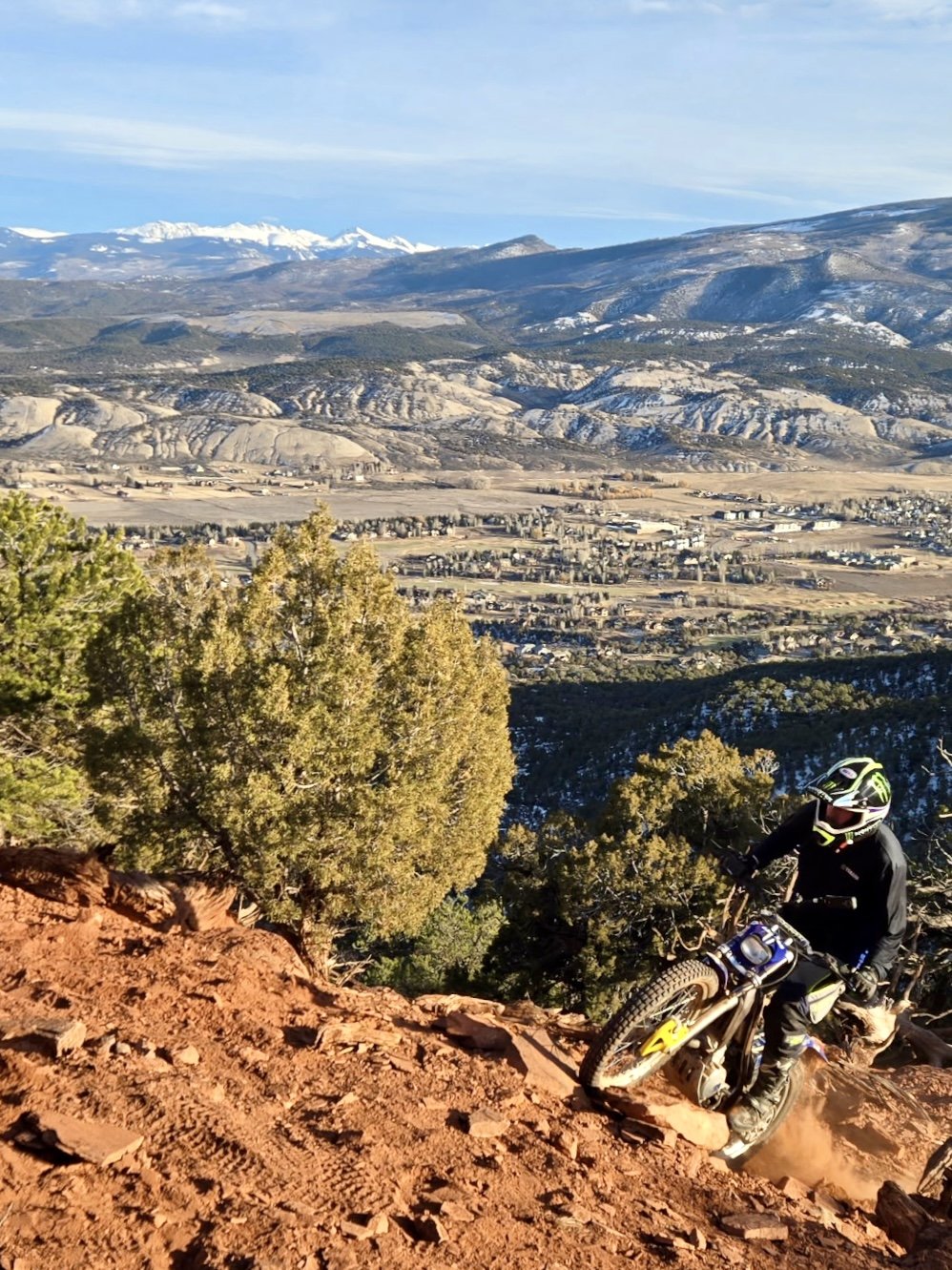
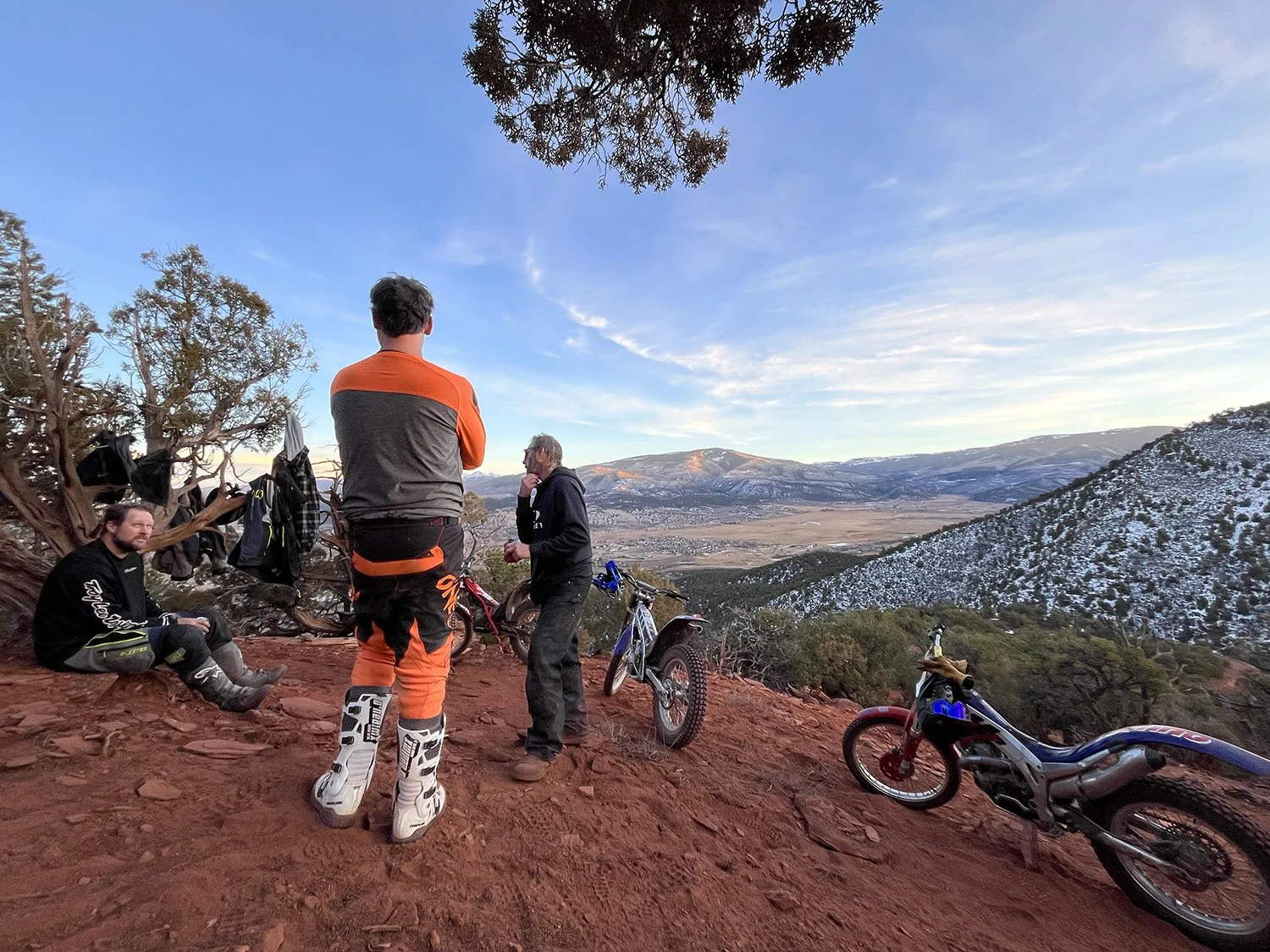
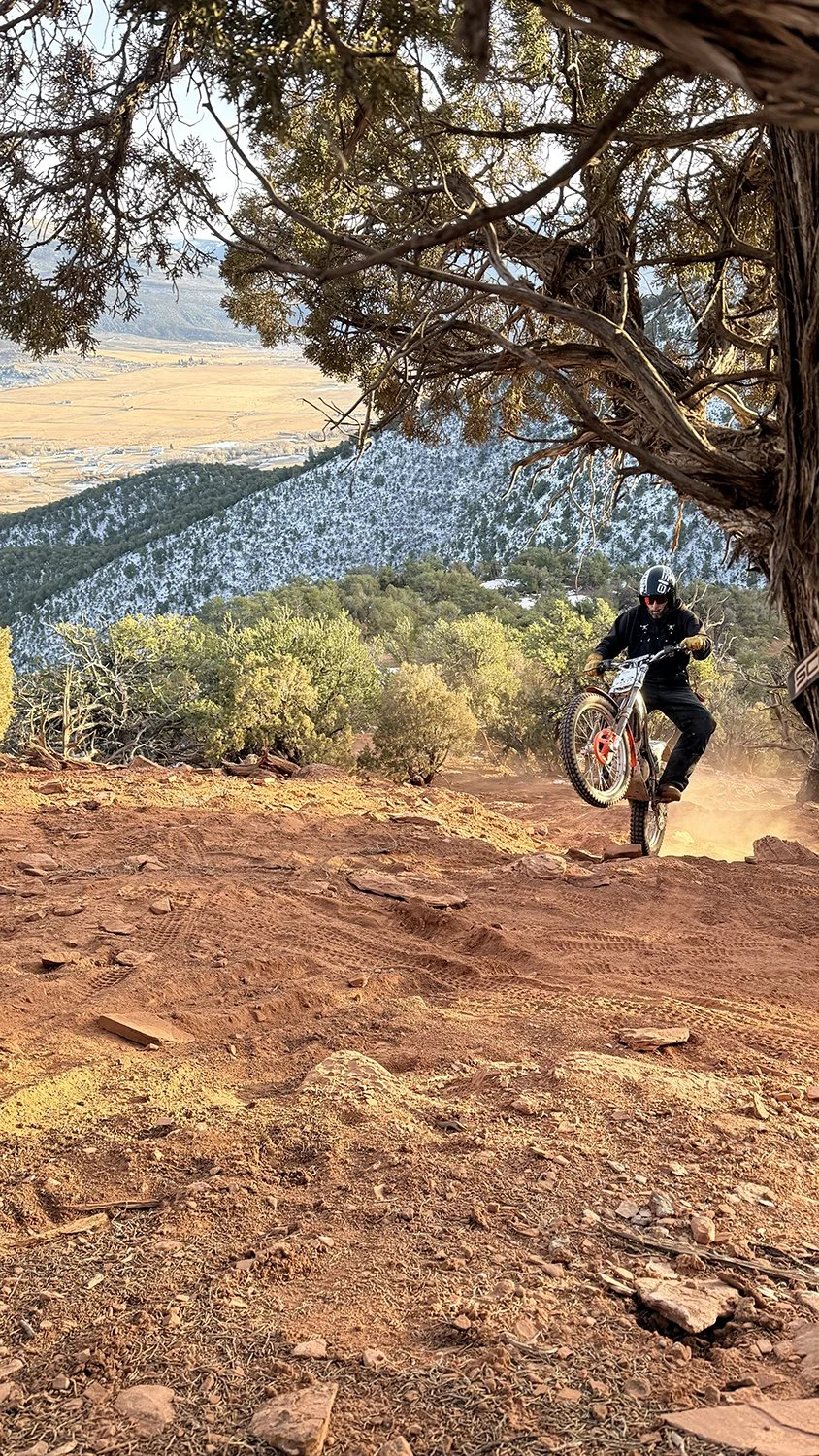
One unexpected benefit of trials riding has been how perfectly it fits into winter. When many trails are closed, or buried, trials still thrives. This winter season in particular, with low snowfall and warmer temperatures, has created an ideal window to get out on the little bike. Trials doesn’t require much space, and many riders practice in their backyards. Our “backyard” in Gypsum just happens to include Red Hill and the Gypsum Hills Recreation Area, both offering year-round access (snow permitting) with steep terrain, rocky zones, logs, ledges, and technical climbs and descents with south-facing slopes staying relatively dry. A few friends and I have discovered some incredibly fun zones that pack endless challenges into small areas.
I’m only about eight weeks into this journey, but I’m already looking forward to connecting with the Rocky Mountain Trials Association, attending events, meeting more riders, and continuing to learn. Trials may be new to me, but it feels like a missing puzzle piece, one that complements everything I already love about riding.
Here’s to new skills, new challenges, and continuing my “amazing two-wheeled life behind bars.”