Sometimes the best adventures are the ones that don't go according to plan.
Over the past couple of years, I've spent a lot of time exploring Colorado's backcountry on my adventure motorcycle. From high mountain passes and remote two-track roads to some of the more technical trails scattered throughout the Rockies, I've developed a real appreciation for just how much freedom an adventure bike provides, and how incredibly capable these machines are.
But most of those miles have been solo.
Don't get me wrong, there's something special about heading out on your own with nothing more than a motorcycle, some camping gear, and a GPS full of routes waiting to be explored. I've always enjoyed that independence. The opportunity to discover new places, make decisions on the fly, and see what's around the next corner is a big part of what draws me to adventure riding in the first place.
During my time working with Yamaha, I had opportunities to ride with other Yamaha staff and ambassadors, scout routes, and put some serious miles on the Ténéré 700 in the mountains. Those experiences reinforced just how much I enjoy researching, planning, and exploring new trails.
But riding alone also comes with some significant challenges.
When you're 30 miles down a remote trail with no cell service, limited tools, and nobody around to help, even a minor mechanical issue can turn into a serious situation. A flat tire, broken lever, or simple tip-over can quickly become a much bigger problem. I've encountered similar situations exploring in my 4Runner over the years. There have been plenty of times when I've reached a difficult obstacle, considered the potential consequences, and decided it was smarter to turn around. Not necessarily because I couldn't make it through, but because the consequences of not making it through were too high. That's an important distinction.
Adventure motorcycle riding is inherently risky, and part of being a responsible rider is understanding when the potential reward simply isn't worth the risk. But what happens when you add a few good friends to the equation?
A New Riding Partner, A New Perspective
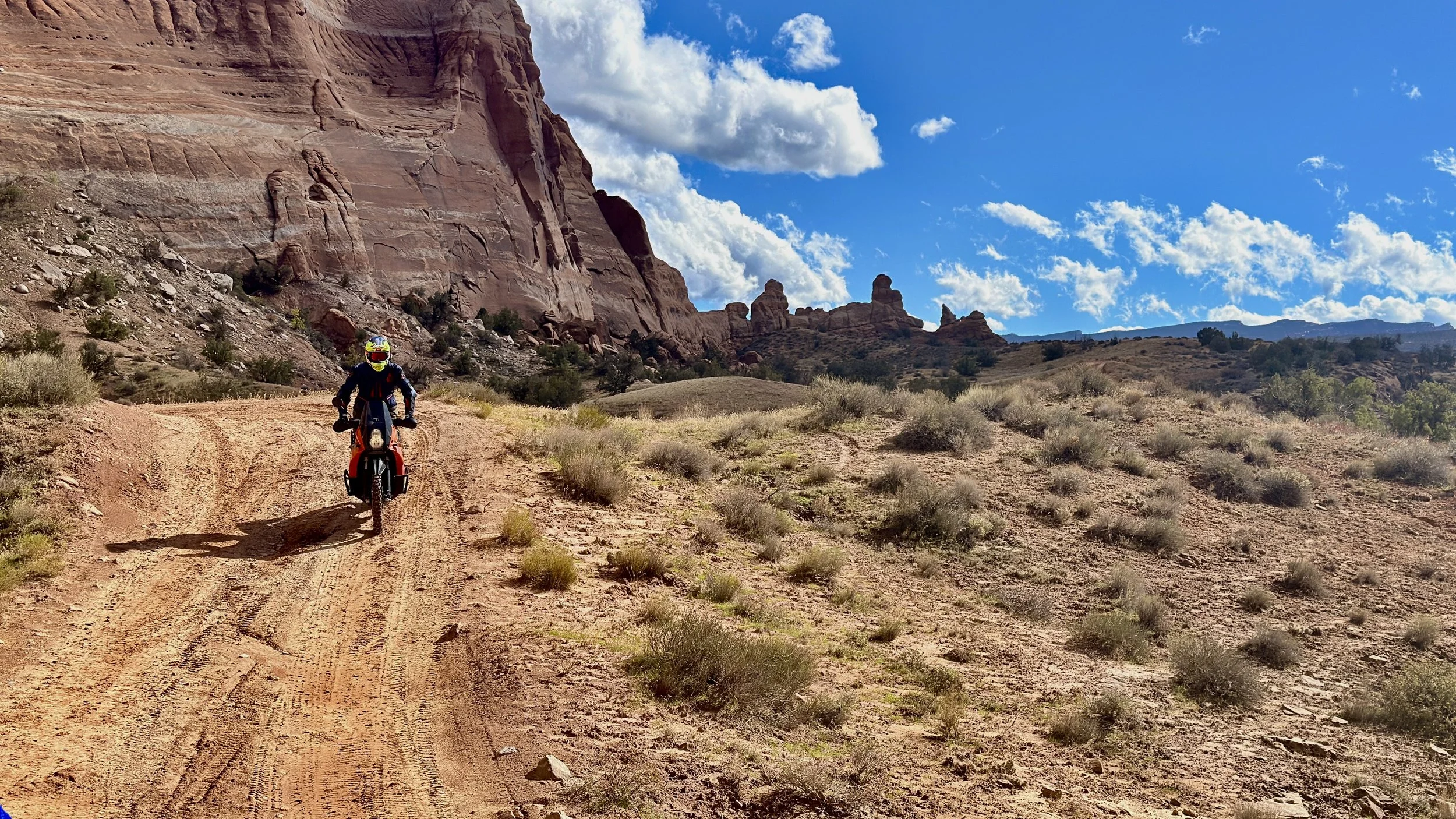
Recently, my buddy Jamas picked up a KTM 890 Adventure, opening the door to a whole new chapter of riding together. Now, Jamas isn't exactly your average motorcycle rider. He's a former professional-level motocross and supercross racer with an incredible amount of experience on two wheels. He's also competed at the World Cup level in downhill mountain biking, spending much of his life navigating difficult terrain at speeds most people wouldn't even consider.
A big crash resulting in a traumatic brain injury (TBI) a few years ago significantly changed his relationship with riding. Rather than sending the biggest jumps, chasing the fastest lap times, and being the baddest dude at the track, he's now spending more time exploring trails and tackling technical enduro routes. He's also responsible for getting me into trials riding. What's particularly interesting is how well our different backgrounds complement each other.
I'm a mapping and route-planning nerd. I can spend hours studying onX Offroad, Google Maps, Backcountry Discovery Routes, and Jeep Badge of Honor trails, researching everything from trail difficulty and elevation changes to scenic overlooks and interesting destinations. I've drawn countless loops, point-to-point routes, day trips, and multi-day adventures that are just waiting to be ridden. I love making these routes special by combining scenery, technical challenges, and the history of an area or region. Sometimes the goal is simply to reach somewhere most people will never get to experience.
Jamas, on the other hand, brings an incredible amount of technical riding ability and mechanical knowledge. He understands motorcycles in ways I simply don't, and he's remarkably good at figuring out how to fix something when things don't go according to plan. Even when we don't have the proper factory replacement parts. Combine those two skill sets, and suddenly we're able to approach an adventure with a lot more confidence.
And as I've said for years: Comfort + Confidence = The Opportunity for Performance.
If you're not comfortable with your surroundings, confident in your equipment, or comfortable in your ability to handle a situation, you're never going to have the opportunity to perform at your best. Having the right riding partners can make a tremendous difference.
The Plan: White Rim Trail, Moab, Utah
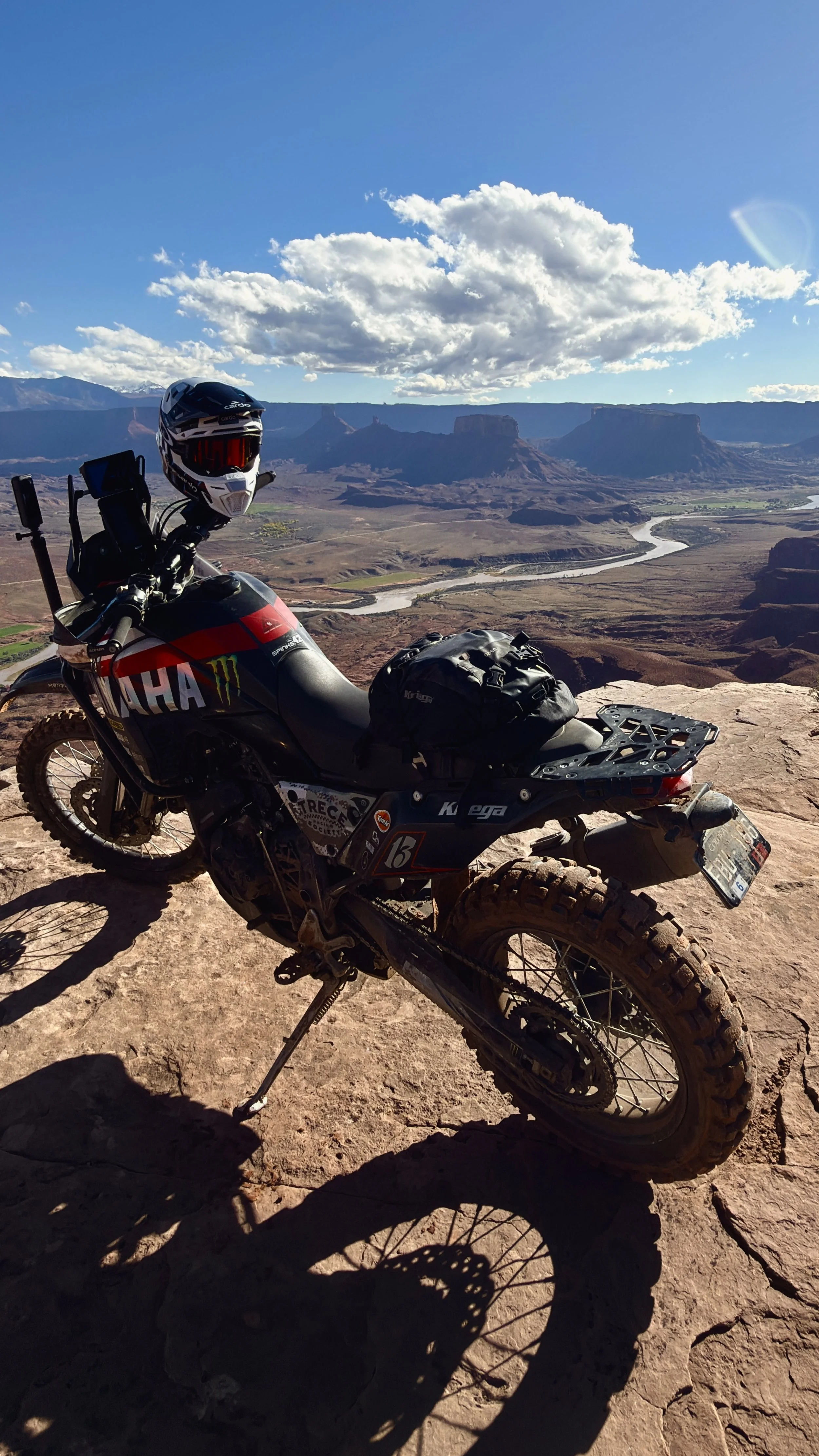
Our latest adventure started with a rather ambitious goal: riding the famous White Rim Trail in Canyonlands National Park, just outside Moab, Utah. For anyone unfamiliar, it's an absolutely spectacular 100-plus-mile backcountry route winding through some of the most incredible desert landscapes in the American Southwest. Towering canyon walls, massive rock formations, exposed overlooks, and incredible views of the Colorado River make it a bucket-list destination for adventure riders and off-road enthusiasts alike. Because the route travels through Canyonlands National Park, permits are required, and access is carefully managed.
There would be three of us on this ride: Jamas, our friend we call Juice, and me. We'd done our homework. The route was mapped, the motorcycles were ready, and we were preparing to secure our permits. Then came the bad news.
After speaking with someone at Canyonlands, we learned that a significant portion of the White Rim loop was closed due to recent flooding and rockslides. Moab has recently experienced some unusually heavy rainfall, and the desert environment can be particularly unforgiving when large amounts of water arrive in a short period. Water runs quickly off the slickrock and through the surrounding drainages, creating flash-flood conditions in lower canyon areas. Trails that are normally perfectly passable can become flooded, washed out, or buried under debris.
With the loop interrupted, our options were limited. We could potentially ride a portion of the route as an out-and-back, but that wasn't really the experience we'd planned.
Rather than force it, we decided to save the White Rim for another trip. Fortunately, one of the best things about Moab is that there's no shortage of incredible places to explore. Time for Plan B.
Dome Plateau: A Little More Adventure Than Expected
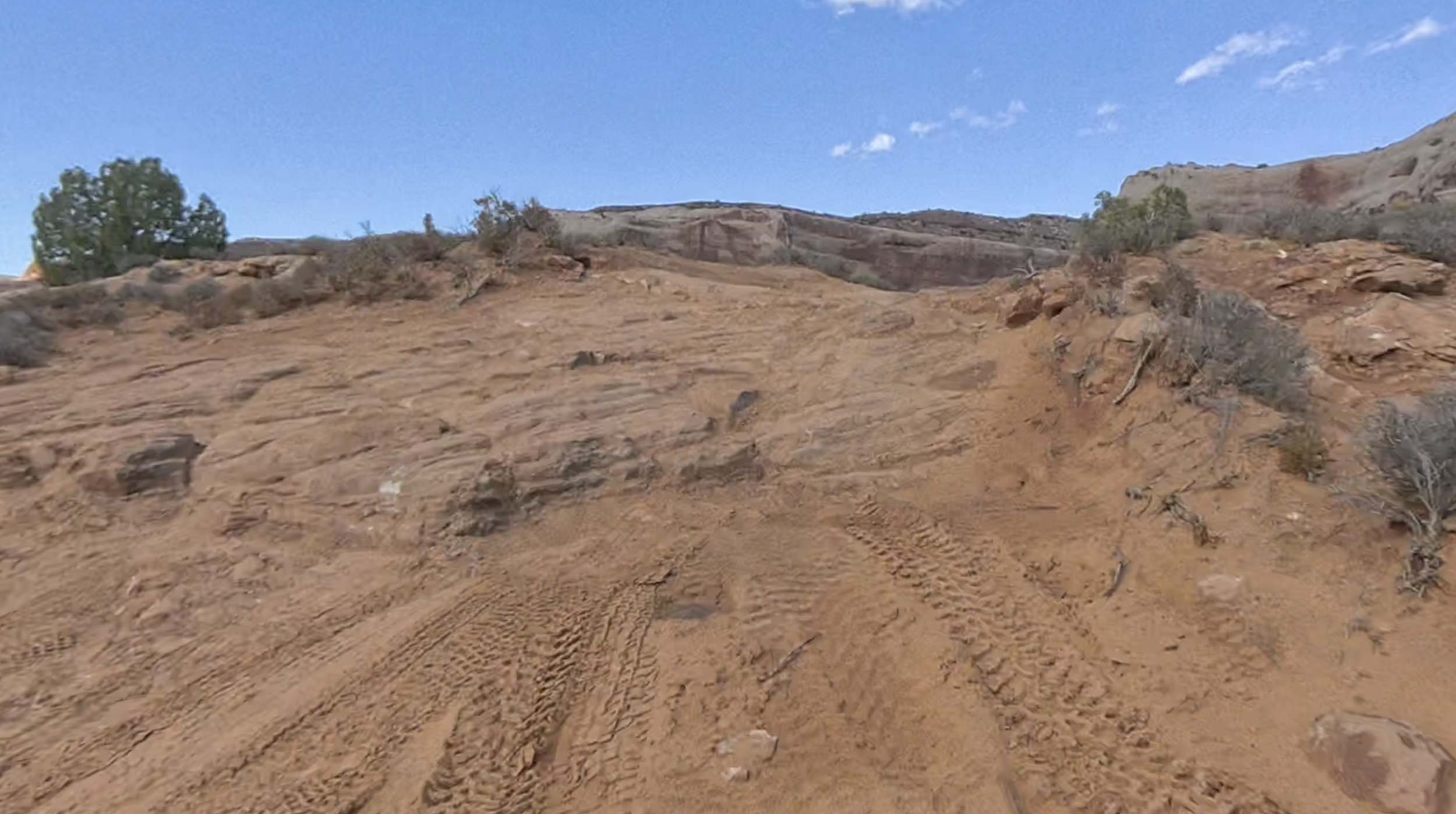
Our backup plan was the Dome Plateau trail system, northeast of Moab near Dewey Bridge. I'd spent plenty of time studying the area, looking at trail descriptions, videos, maps, and difficulty ratings. The route I'd put together was approximately 60 miles, with most of the trails falling somewhere around a three or four out of ten on the OnX Offroad difficulty scale. In my mind, that sounded perfect. A little more challenging than your average gravel road, but nothing too extreme for a few experienced riders on adventure motorcycles.
We figured we could average around 15–20 mph, spend four or five hours exploring, stop for photos, and enjoy a great day in the desert. Of course, that's not exactly how things worked out. Our first planned access point was essentially impassable due to saturated sand and mud left behind by the recent storms. So we continued down the highway toward Dewey Bridge, where we found the main entrance into the Dome Plateau trail system.
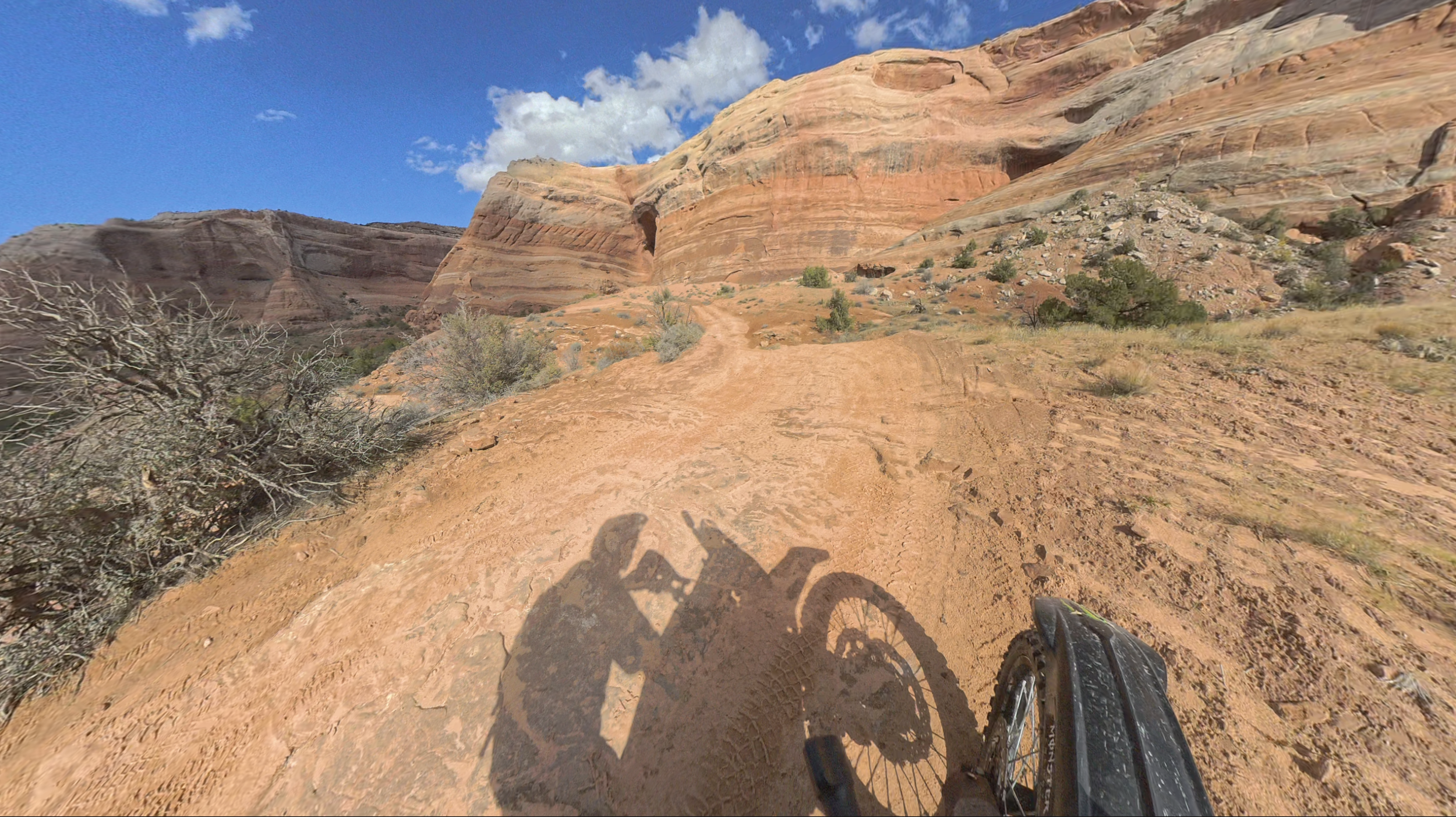
We parked the truck and trailer, unloaded the bikes, and headed out. Almost immediately, it became apparent that this wasn't going to be a casual cruise down a smooth desert two-track. The trail climbed through rocky terrain with loose surfaces, ledges, and plenty of obstacles that required careful line selection. Nothing particularly unusual for a capable side-by-side or ATV, but on a big adventure motorcycle weighing more than 450 pounds, it's a completely different experience. Juice and I both had an awkward tip over within the first mile of the trail, forcing us to reset mentally and lock in for what was to come. Juice mentioned after the ride, "We got off to a rough start, not knowing what to expect."
Maps Can Only Tell You So Much
One of the biggest lessons I've learned from years of route scouting is that there's absolutely no substitute for putting tires on the ground. You can study satellite imagery, watch YouTube videos, read trail descriptions, and compare difficulty ratings all day long. And believe me, I do.
But until you actually get out there and experience a trail for yourself, you never really know what you're going to encounter. Trail difficulty ratings are also incredibly subjective. For example, a route might be rated a six out of ten because of one particularly difficult 50-foot section, while the remaining 20 miles are relatively easy. For a Jeep or side-by-side, that obstacle might be nothing more than a fun little challenge. For someone riding a 400–500-pound adventure motorcycle, it could be a completely different story. Weather adds another variable. Sand becomes saturated, rocks become slippery, washouts appear, and trails can change dramatically from one day to the next. In fact, there were sections of trail that dried significantly during the short time we were out riding.
Dome Plateau was a perfect example. What looked like a relatively straightforward 60-mile adventure on the computer turned into a much slower, more technical ride than anticipated. By the time we reached one of the incredible overlooks, we'd covered a whopping 17 miles in approximately two and a half hours. So much for averaging 15 mph. But here's the thing: we were having an absolute blast. Jamas dubbed it "adventure crawling."
Why the Right Riding Partners Change Everything
If I'd been riding Dome Plateau alone, there's a pretty good chance I would have turned around much earlier, maybe even within the first mile, and chosen a different route altogether. Not because the trail was beyond my abilities, but because the consequences of making a mistake were considerably higher.
Having Jamas and Juice along completely changed that equation. After realizing as a group that the trail was more difficult than we expected, we changed our approach. We stopped to evaluate obstacles, discussed the best lines, spotted each other through difficult sections, and provided a little encouragement when someone needed it. And perhaps most importantly, we could laugh and smile through the whole ride.
There's something incredibly rewarding about working through a difficult section of trail with a group of friends. What might feel intimidating on your own becomes a shared challenge, and overcoming those challenges together makes the experience that much better. Of course, having friends along doesn't eliminate the risks. We're still riding heavy motorcycles through remote terrain, far from immediate assistance. But knowing someone is there to help pick up a bike, troubleshoot a mechanical problem, provide first aid, or go get help if necessary, creates an entirely different level of comfort. That comfort creates the confidence to try new things, push your skills a little further, and enjoy the experience rather than constantly worrying about what might go wrong. It's not about being reckless or pushing beyond your abilities. It's about creating an environment where everyone feels comfortable challenging themselves while still making smart decisions.
Communication Is the Real Game Changer
Another thing that became incredibly apparent during this trip was just how valuable our Cardo communication systems are. I've spent plenty of time working with Cardo, demonstrating their products and explaining the advantages of rider-to-rider communication. Being able to chat with your friends, share directions, or talk a little trash while riding is certainly entertaining and easy to describe to customers at an event or trade show. But out on a remote, technical trail like Dome Plateau, communication becomes so much more than a convenience. It's a major contributor to both comfort and confidence.
Being able to warn the rider behind you about a difficult obstacle, explain which line you took, or simply check that everyone is doing okay significantly changes the experience. Instead of constantly stopping, removing helmets, and trying to yell at each other over running engines, we could talk naturally while riding.
"Watch that big rock on the right."
"Stay left, the sand gets pretty deep over here."
"Hold up a second, I want to check this out and see what line we should take."
Or, just as importantly:
"Man, look at that view!"
Sometimes it's the simplest conversations that make the most significant impact. Being able to share the experience in real time creates a connection between riders that you simply don't get when everyone is riding in their own little world. And when things become more technical, that connection becomes even more valuable. There's tremendous reassurance in knowing that your riding partners are right there, everyone understands what's happening, and you can communicate immediately if something goes wrong. It's another perfect example of how comfort and confidence create the opportunity for optimum performance.
The Cardo systems didn't make the trail easier. They made us better equipped to experience it together, and for me that's where the real value comes from.
Sometimes the Best Adventure Is Plan B... or Even Plan C
By the end of the day, we hadn't ridden the White Rim Trail. We hadn't completed the 60-mile Dome Plateau loop we'd planned, and we'd spent considerably more time navigating gnarly, rocky terrain than cruising along scenic desert roads. But none of that really mattered. We'd explored an incredible part of the Moab backcountry, discovered some spectacular overlooks, challenged ourselves on terrain that was a little more difficult than expected, and shared the entire experience with good friends. More importantly, we were able to adapt.
When White Rim was closed, we found another route. When our first trail entrance was impassable, we found another way in. When the terrain turned out to be more difficult than expected, we slowed down, reassessed our expectations, and made the most of the day. That's really what adventure riding is all about. It's not necessarily about checking a particular trail off your bucket list, conquering the most difficult obstacle, or covering the most miles. It's about exploring new places, embracing the unexpected, and enjoying the experiences along the way.
I'll always appreciate the freedom and solitude of riding alone, but this trip reminded me just how much better some adventures can be when they're shared. Especially when you've got the right friends, complementary skills, and the ability to communicate every step of the way. At the end of the day, the best adventures aren't always the ones that go according to plan, they're the ones that give you the best stories to tell afterward.
Ride smart. Explore often. And don't be afraid to change the plan.